LANETT- During Monday’s Lanett Council Work Session, the council discussed the possibility of adjusting water rates.
Currently, the minimum residential water rate is $14.25 for 2,000 gallons, while the minimum for commercial use is $26. In comparison, the city of LaFayette charges a minimum of $26.27 for residential and $37.40 for commercial. In Hughley, the residential water rate is $27.89, and the commercial rate is $127.80 for 15,000 gallons. East Alabama’s residential water rate is $31.54.
“It appears that our minimum payments for water are on the low end, and I would like to see us raise our rates. If we do increase the minimum water rate, I propose we set it at 2,500 or 3,000 gallons, similar to what East Alabama does,” stated District 3 Councilmember Brad Lynn.
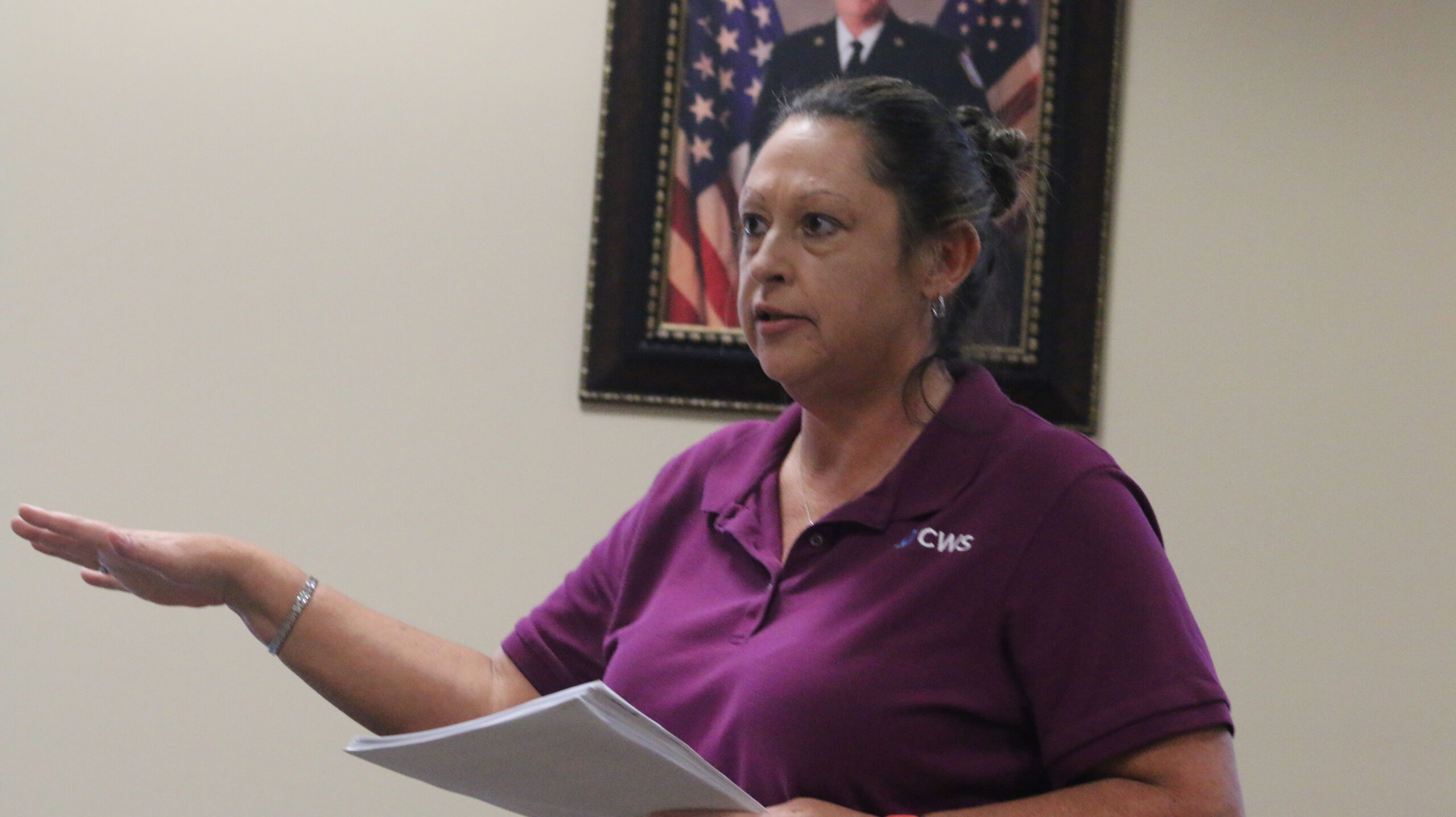
“Do we know how much the average three-bedroom house pays for water?” Lynn inquired of Clearwater Solutions Director of Safety and Training, Katie Hill.
Hill responded, “Statistics from a statewide study in Alabama for 2023 indicate that the minimum median household cost for 2,000 gallons of water is $22.31.”
She recommended that the council conduct a rate study, which would be provided at no cost. “When doing a rate study, you cannot base it on what neighboring communities charge. Each community has different debts and varying customer numbers. The study needs to focus on our specific situation rather than comparing ourselves to what others are doing,” Hill explained. “I will use your audit, of which I have a copy, and the information from it to build a comprehensive study based on our circumstances.”
Lanett Water Department Foreman Micael Sides was present and shared detailed information about some of the water issues the city is experiencing, including concerns about meter readings that were reported to Clearwater.
I conducted a study analyzing a month’s worth of bills for all customers. I examined the total number of customers and identified the number of meter readings that showed zero usage. There were 278 accounts that reported zero usage for the month, which indicates a potential issue.
I recommended investigating how long these meters have been reading this way. Is this a recent development, or has it been an ongoing issue? We also need to check all these accounts to ensure that the meters themselves are functioning correctly.
Out of a total of 1,008 accounts, approximately 38 to 39% had usage at the minimum level, meaning they were not using more than 2,000 gallons. Among these, the 278 accounts with zero usage are particularly concerning, especially since many of these locations are businesses, said Hill.
In response to the meter readings, Sides addressed the issue. “If there’s a leak, we trace it from the main line back to the meter. If the meter is old, we replace it. We are actively working to determine what type of meters the businesses have. Do they have a standard meter?”
I understand that rates vary for different meters in some utilities, but without adequate personnel to monitor everything, and with only five people in our department, I take this situation very seriously. We are committed to finding a solution,” stated Sides.
According to Hill, the study should not take less than a week to complete. “Depending on your level of involvement, it won’t take less than a week. I’ll provide a full account of the good, the bad, and the ugly. Accountability is key,” he added.
Lanett’s average water usage was estimated at 3,000 gallons as of 2024. “The recommendation was made for you to reduce the average from 3,000 to 2,000 gallons while maintaining the same rates without an increase. That decision made a difference,” noted Hill.
The last water rate increase in Lanett occurred in 2009. Hill will present the final study and recommendations at the upcoming Lanett Council meeting on September 8th, which will also include sewage considerations.