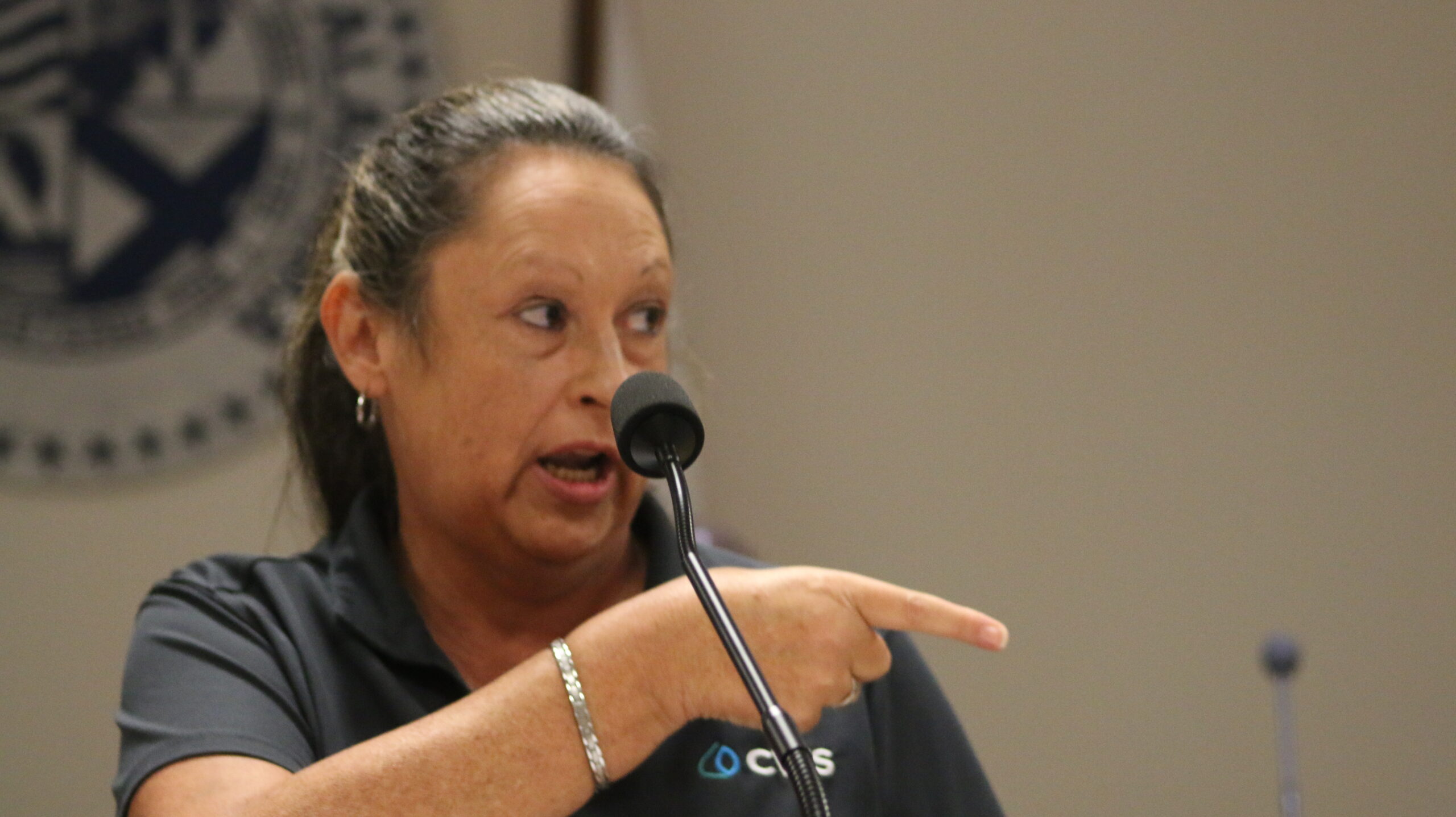
LANETT, Ala. — The Lanett City Council reviewed proposed water and wastewater rate increases during its Tuesday meeting following a presentation by Katie Hill of Clearwater.
Mayor Jamie Heard recognized Hill for completing the city’s water rate study.
Hill said a full rate recovery for the city’s water system would require increasing the minimum residential bill to $30.39 and raising the charge per 1,000 gallons to $11.73.
That would represent a 113.3% increase, Hill said, adding that while the change would eliminate the city’s operating shortfall, improve cash flow and create funding for system improvements, she does not recommend implementing the full increase immediately.
“I do not recommend doing that, but I did promise y’all I would give you that number,” Hill said.
Instead, Hill recommended a 32% water rate increase beginning in fiscal year 2027. Under the proposal, the minimum residential bill would increase from $14.25 to $18.81, while the rate per 1,000 gallons would increase from $5.50 to $7.26.
Hill said the city should review the rates again after collecting three or four months of accurate revenue data from corrected meter readings.
“If we go up to the 113.3% right now, what if we find out that we were able to recuperate a lot of that revenue and you put it on your customers for no reason?” Hill said.
For wastewater service, Hill said the system’s financial condition was better than the water system’s. She recommended increasing the minimum wastewater charge from $12.50 to $13.50 in fiscal year 2027. Her projections also included $200,000 for potential sewer-system improvements.
Hill also recommended increasing the commercial water minimum bill to $19.80 and the rate per 1,000 gallons from $8.25 to $10.89. She said the city could further review commercial rates after determining how many commercial meters it has and how its definition of commercial customers compares with those of other municipalities.
Much of the discussion focused on inaccurate or missing meter readings and revenue the city may not be collecting.
Hill said an audit identified nearly 332,000 gallons of unaccounted-for water and estimated the associated loss at approximately $691,000. Council members noted the city also reported losses of more than $500,000 in 2023 and approximately $600,000 in 2024.
Lanett Water Superintendent Richard “Bull” Chapman said his team is reviewing approximately 286 meters, including about 160 that have already been identified as having problems, according to the discussion.
Chapman said some meters were listed in the billing system even though they did not exist, while others had incorrect meter specifications. In some cases, meters were recording usage but customers were still receiving minimum bills.
Hill said she preferred the term “unaccounted-for revenue” rather than water loss because some customers were being charged only the minimum bill despite using more water than the amount covered by that charge.
Council members discussed whether the city should hire an engineer to assist with the review. A city representative said he was communicating with a consultant who could map the entire water system and help identify discrepancies.
Hill said she would participate in a meeting with the consultant.
“It just don’t make no sense that a meter is reading and we’re not getting any money for it,” one council member said.
The council did not take final action on the proposed rates during the meeting.
Before adjourning, Heard appointed the Rev. Harold Henson as the city’s chaplain and thanked department heads, including the electric department, for their work responding to service issues.