
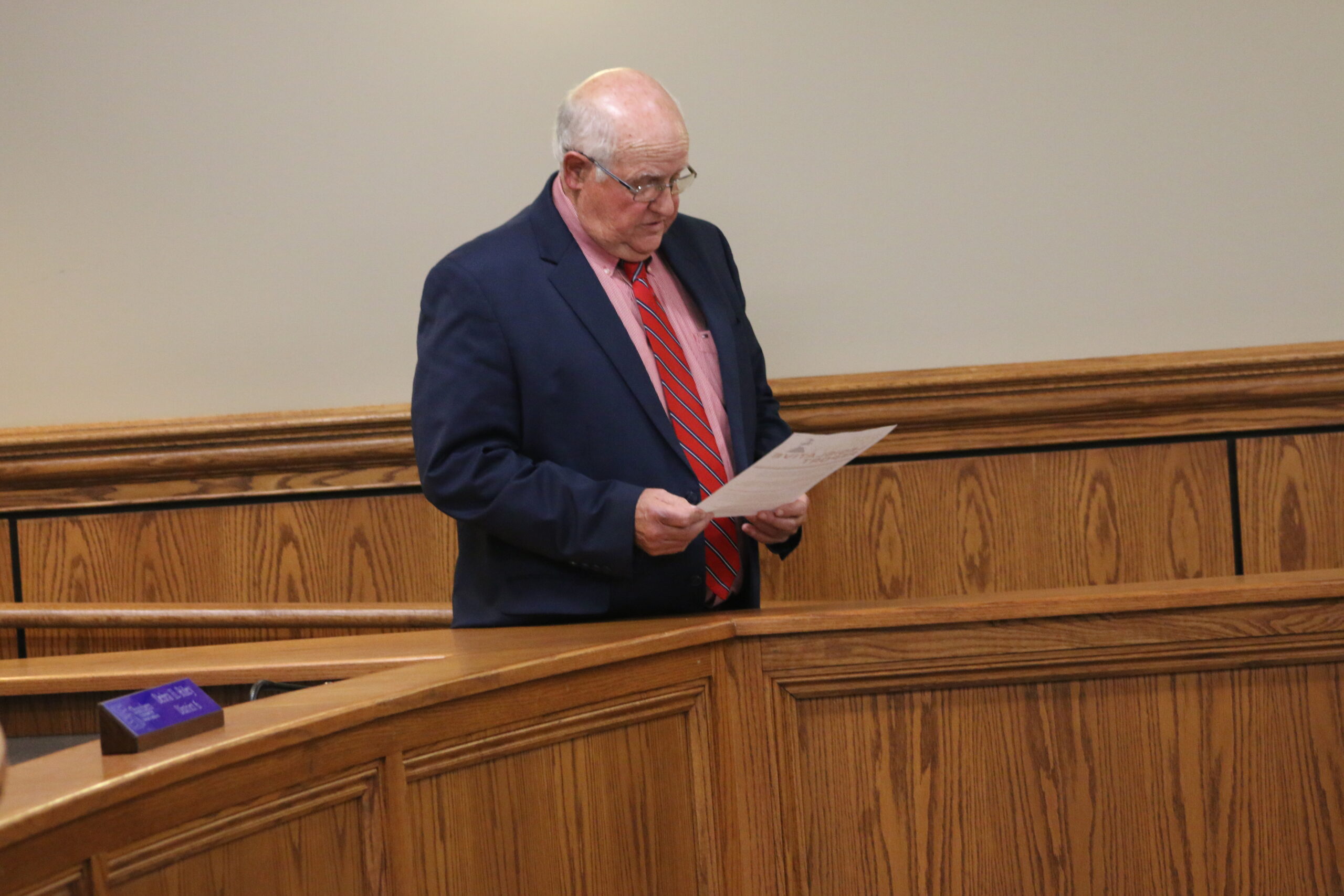
LaFayette – During Monday’s Chambers County Commission meeting, Commissioner Sam Bradford recognized the Chambers County Leadership Program, highlighting the contributions of Charles Brandon Bagley and Nancy Warren Holland, who were present at the meeting.
Following this recognition, Bradford provided an update on the 2026 County Legislative Report.
“Chambers County, in collaboration with the state association of county commissioners, is actively engaged with other counties in Alabama. We are working together during the regular session of the state legislature to enhance the efficiency of county government and improve services for our residents,” said Bradford.
In the first week of February, the County Commission’s legislative advocacy efforts, which involved ongoing communication and collaboration with state legislators and fellow commissioners across Alabama, resulted in significant legislative achievements for both the county and its residents.
One of these achievements is the approval of state grants aimed at clarifying the family exception for county subdivision regulations. On February 3rd, the Senate granted final passage to House Bill 140, introduced by Representative Chris Seals and Senator Robert Stewart, and sent it to the Alabama Governor for consideration. If signed, the bill will preserve and strengthen the process for family-to-family transfers of county property, aligning county subdivision rules with municipal standards and providing greater clarity and certainty for landowners and local governments.
Additionally, on February 5th, the Senate approved House Bill 117, introduced by Representative Jim Hill and Senator Lance Bale, and sent it to the Governor for her consideration. If signed, this bill will expand the use of purchasing procurement cards by counties to include service-related expenses. This will streamline routine transactions, saving both staff time and taxpayer dollars while improving financial oversight and accountability.
“This progress does not happen by chance. It requires the collective effort of all of us, along with support from commissions across the state, as well as the active involvement of citizens who reach out to their senators and representatives,” Bradford added.
LaFayette – During Monday’s Chambers County Commission meeting, Commissioner Sam Bradford recognized the Chambers County Leadership Program, highlighting the contributions of Charles Brandon Bagley and Nancy Warren Holland, who were present at the meeting.
Following this recognition, Bradford provided an update on the 2026 County Legislative Report.
“Chambers County, in collaboration with the state association of county commissioners, is actively engaged with other counties in Alabama. We are working together during the regular session of the state legislature to enhance the efficiency of county government and improve services for our residents,” said Bradford.
In the first week of February, the County Commission’s legislative advocacy efforts, which involved ongoing communication and collaboration with state legislators and fellow commissioners across Alabama, resulted in significant legislative achievements for both the county and its residents.
One of these achievements is the approval of state grants aimed at clarifying the family exception for county subdivision regulations. On February 3rd, the Senate granted final passage to House Bill 140, introduced by Representative Chris Seals and Senator Robert Stewart, and sent it to the Alabama Governor for consideration. If signed, the bill will preserve and strengthen the process for family-to-family transfers of county property, aligning county subdivision rules with municipal standards and providing greater clarity and certainty for landowners and local governments.
Additionally, on February 5th, the Senate approved House Bill 117, introduced by Representative Jim Hill and Senator Lance Bale, and sent it to the Governor for her consideration. If signed, this bill will expand the use of purchasing procurement cards by counties to include service-related expenses. This will streamline routine transactions, saving both staff time and taxpayer dollars while improving financial oversight and accountability.
“This progress does not happen by chance. It requires the collective effort of all of us, along with support from commissions across the state, as well as the active involvement of citizens who reach out to their senators and representatives,” Bradford added.